










Understanding the Importance of Completing Your Medicine Course
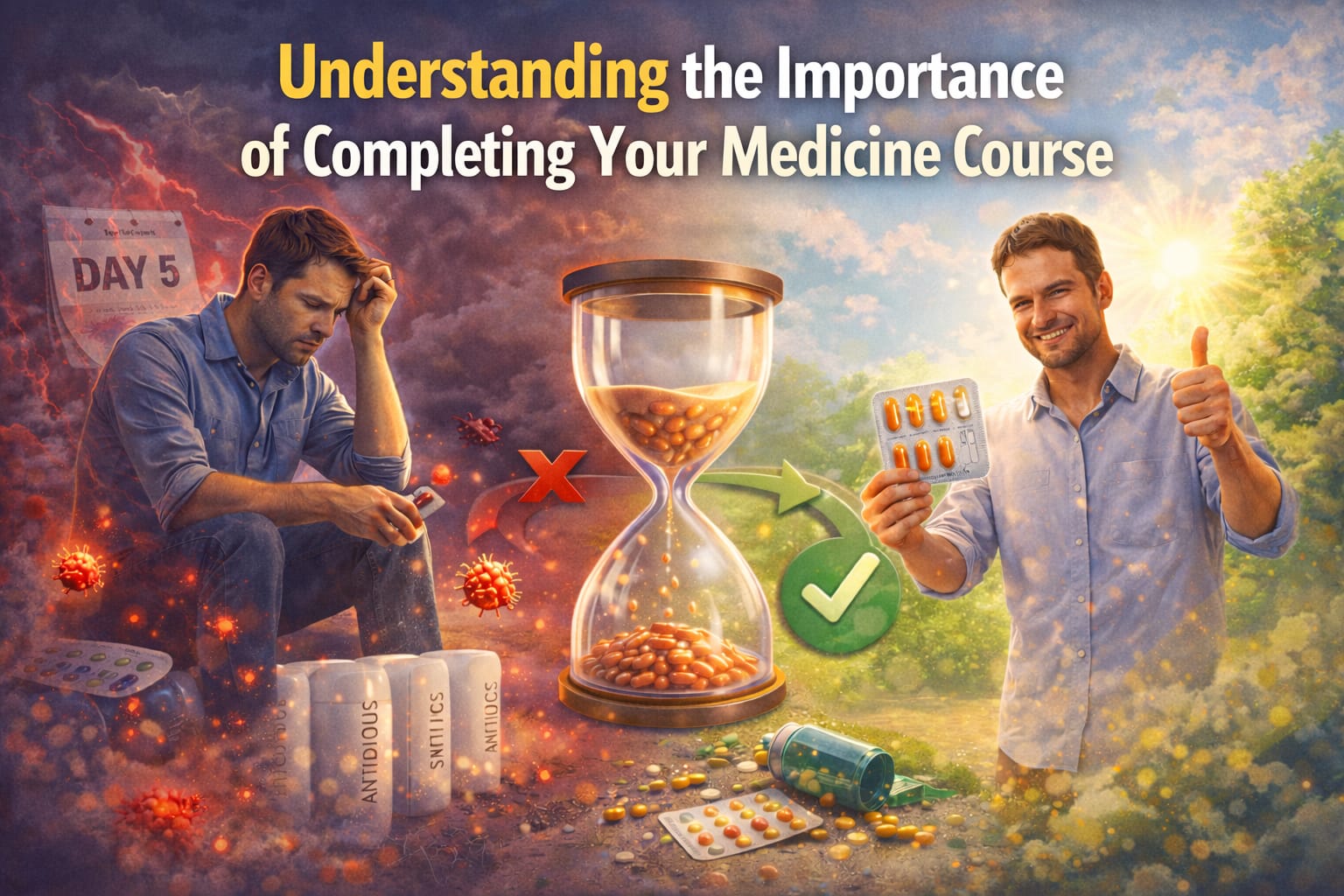
When people start feeling better after taking medicines for a few days, many assume that the illness is completely gone. As a result, they stop taking their medicines before finishing the full prescribed course. Although this may seem harmless, not completing a medicine course can lead to serious health risks and reduced treatment effectiveness.
Understanding why it is important to finish your medication exactly as prescribed can help ensure proper recovery and prevent future complications.
What Does “Completing a Medicine Course” Mean?
A medicine course refers to the full duration and dosage of medication prescribed by a healthcare professional. It may include taking medicines for a specific number of days or weeks, even if symptoms improve before the course ends.
Completing the course ensures that the medicine has enough time to fully eliminate the infection or manage the health condition effectively.
Why Completing Your Medicine Course Is Important
1. Ensures Complete Recovery
Many medicines, especially those used for infections, continue working in the body even after symptoms start to improve. Stopping medication early may leave some harmful bacteria or viruses in the body, which can cause the illness to return.
Completing the full course helps ensure that the infection is completely treated.
2. Prevents Antibiotic Resistance
One of the biggest global health concerns today is antibiotic resistance. When antibiotics are not taken for the full course, some bacteria may survive and become stronger.
These resistant bacteria can:
- Become harder to treat
- Spread to other people
- Require stronger medicines in the future
Following the prescribed course helps reduce this risk.
3. Reduces the Risk of Relapse
Stopping medicines too soon can cause symptoms to return. In some cases, the second infection may be more severe than the first.
Completing the medicine course helps prevent relapse and ensures long-term recovery.
4. Improves Treatment Effectiveness
Medicines are carefully prescribed based on dosage, duration, and the patient’s condition. Completing the treatment as recommended ensures that the medicine works as intended and provides the best possible results.
Common Reasons People Stop Taking Medicines Early
Many individuals discontinue their medication before completing the course due to:
- Feeling better after a few days
- Forgetting to take doses
- Experiencing mild side effects
- Misunderstanding prescription instructions
These behaviors can negatively affect treatment success.
Tips to Complete Your Medicine Course Properly
To ensure you finish your medicines as prescribed, consider these helpful tips:
Follow the Prescribed Schedule
Take medicines at the same time each day to maintain consistent levels in the body.
Use Reminders
Set alarms or reminders on your phone to avoid missing doses.
Do Not Skip Doses
If you miss a dose, follow your doctor’s instructions or consult a pharmacist.
Understand the Instructions
Always read the medicine label carefully and ask questions if anything is unclear.
Special Importance for Antibiotics
Antibiotics are commonly prescribed for bacterial infections. Unlike some other medicines, antibiotics must always be taken for the full prescribed course, even if symptoms disappear.
Incomplete antibiotic treatment may lead to:
- Recurring infections
- Drug-resistant bacteria
- Longer recovery times
Responsible antibiotic use protects both individual and public health.
The Role of a Trusted Pharmacy
Pharmacies play an important role in helping patients understand how to use medicines correctly. A reliable pharmacy provides genuine medicines and clear instructions for safe usage.
At Atina Pharma, we are committed to supporting patients by offering quality medicines and guidance on responsible medication practices. Our goal is to help individuals and families achieve better health outcomes.
When to Consult a Doctor
You should contact a healthcare professional if:
- You experience severe side effects
- You miss multiple doses
- Symptoms do not improve after completing the course
- You are unsure about medication instructions
Never stop taking prescribed medicines without consulting a medical professional.